TEXAS-SIZED CONSEQUENCES FOR EVERYONE!
WELCOME TO OUR NEW HOME!
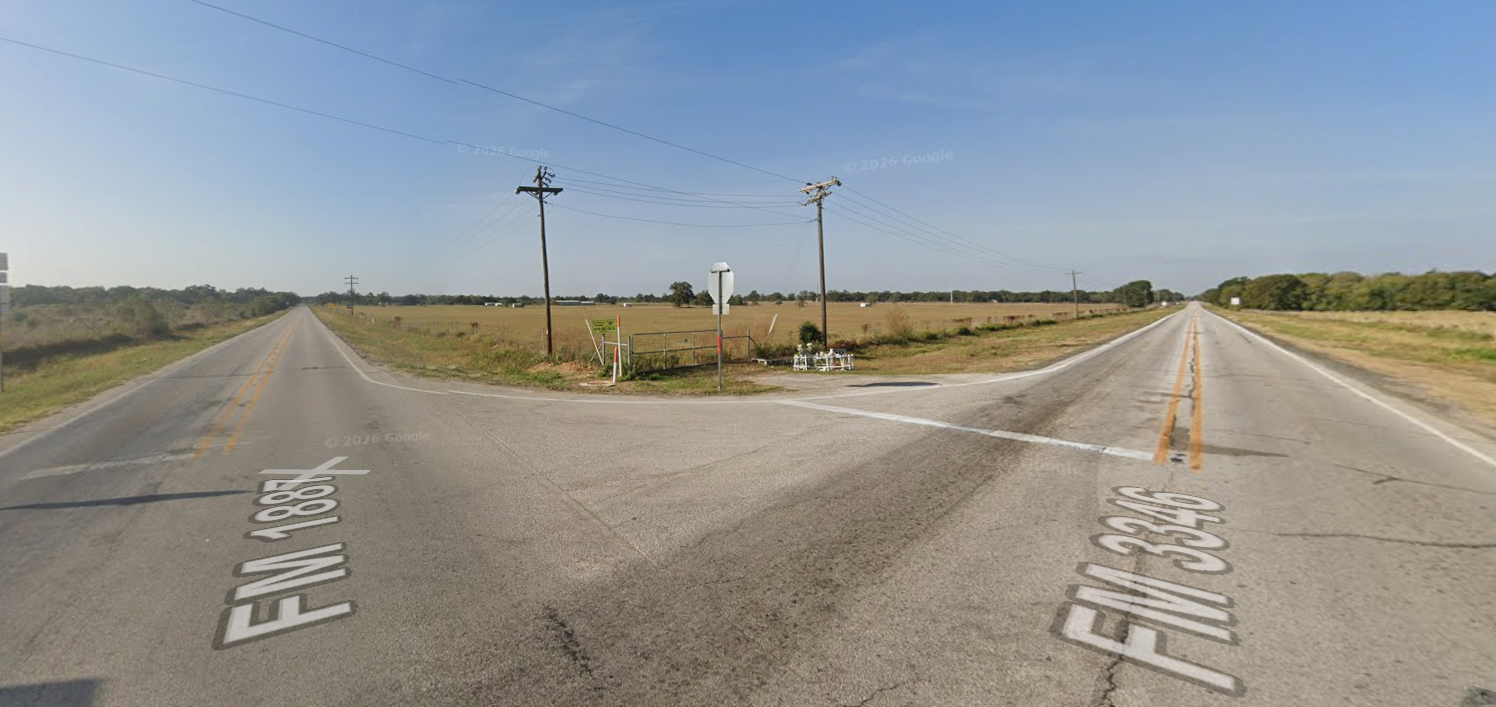
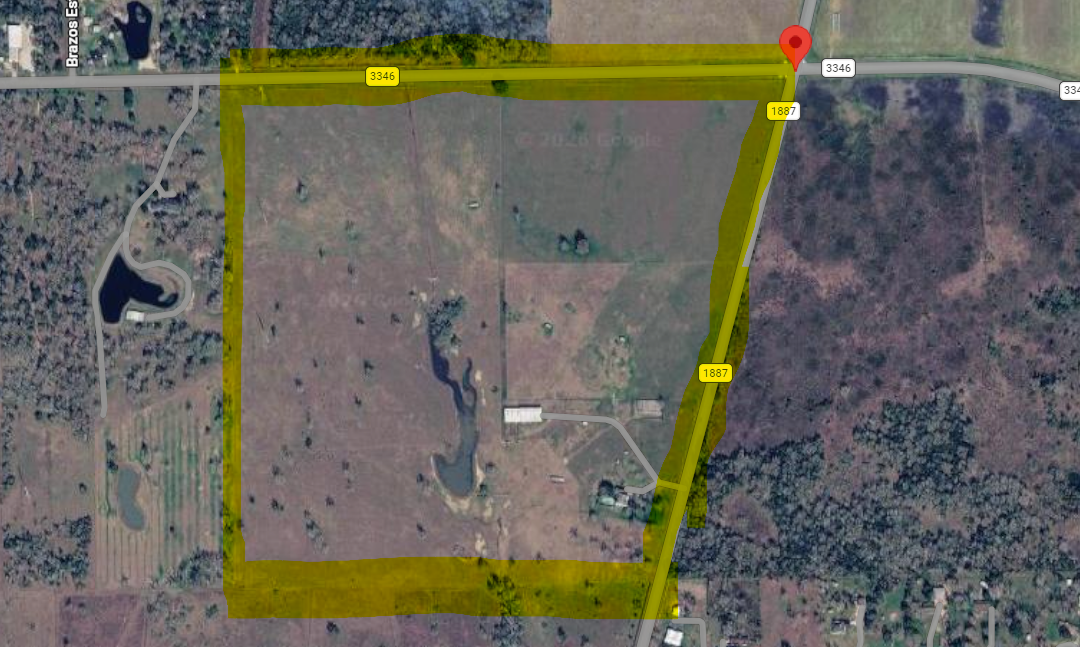
We found it! Right at the corner of FM 3346 and FM 1887 in Hempstead, Texas—hundreds of acres of beautiful Texas countryside surrounded by pastures, farms, ranches, rural homes, cattle, wildlife and quiet country roads.
In other words, exactly the kind of Texas we're planning to celebrate by developing it.
We thought about talking to the community first, but instead we decided to show up like we already belonged here. After all, nothing says “Howdy, neighbor!” quite like letting the neighbors discover the plans after they're already well underway.
And what better location could we possibly have chosen than the intersection of two two-lane FARM TO MARKET roads—FM 3346 and FM 1887?
They're literally called Farm to Market roads.
Naturally, we looked at that and thought: THEME PARK TRAFFIC.
Now, some of our new neighbors might be concerned that this is beautiful farm and ranch land surrounded by people who deliberately chose to live a rural lifestyle.
No problem! We've got an answer for that too:
It's private property.
Don't like what we're building? You could have bought the land yourself. And if you don't like the business coming to your rural community, well, you can always support it...
or move.
There is just one delightfully awkward problem with the “you should have bought it” argument: We were keeping our plans confidential.
People who knew about the project were required to sign NDAs.
So while we're happy to tell the community now what it could have done, it's a little difficult for neighbors to respond to a development plan they weren't being told existed.
Had this beautiful farm and ranch land been openly offered on the public market, who knows what its future might have been?
Maybe another rancher would have bought it.
Maybe a farmer.
Maybe neighboring landowners.
Maybe a family looking for acreage.
Maybe someone who simply wanted to preserve a beautiful piece of rural Waller County.
Maybe it would have remained exactly what it already was: Texas.
But enough about what might have been.
Surprise, neighbors! We're here!
And soon, visitors can travel down those two-lane Farm to Market roads, past actual farms, actual ranches, actual cattle, actual wildlife and actual Texas countryside to reach a commercial attraction where they can experience...
Farms!
Ranches!
Cowboys!
Cattle!
Texas history!
And authentic Texas countryside!
Maybe we'll even preserve a little pasture so everyone can see what the rest of the place looked like before we got here.
Because apparently simply experiencing rural Texas isn't enough.
First, you develop it.
Then you theme it.
Then you market it.
Then you put up the sign.
Then you invite everyone back to experience the “authentic Texas” you just replaced.
FM 3346 & FM 1887 • Hempstead, Texas
Why preserve the real thing when you can develop it—and sell the experience back to everyone?
The Dream
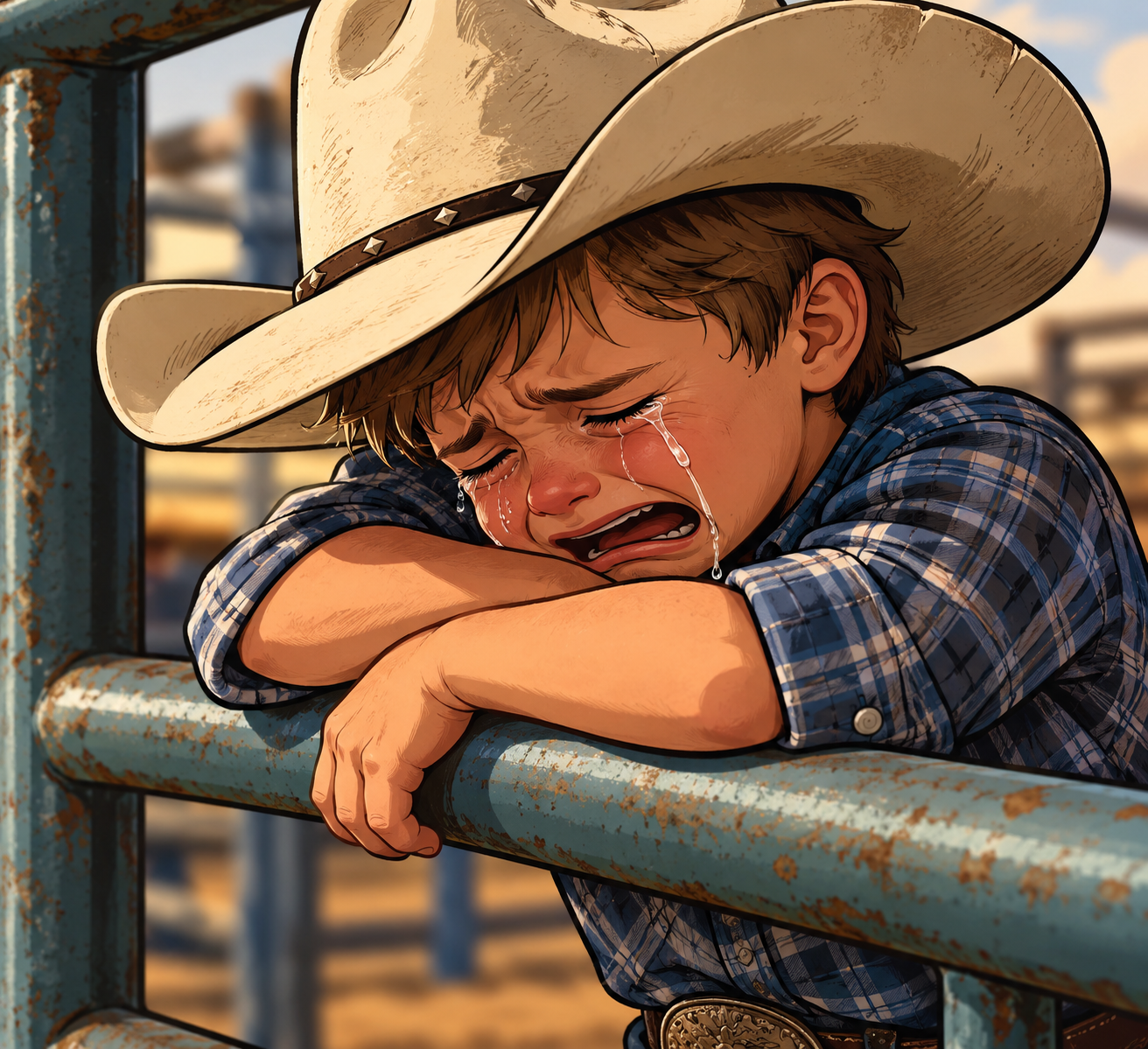
To build a permanent showcase celebrating rural Texas by permanently changing a piece of rural Texas.
Who is TexasLand?
TexasLand is a movement to build a place where thousands of families can experience the Texas countryside after the existing countryside has been developed to accommodate them.
TexasLand is the optimists who want to preserve and celebrate Texas history and folklore—because apparently the best way to preserve rural Texas is with construction equipment, commercial development, parking, hotels, attractions, and a whole lot more pavement.
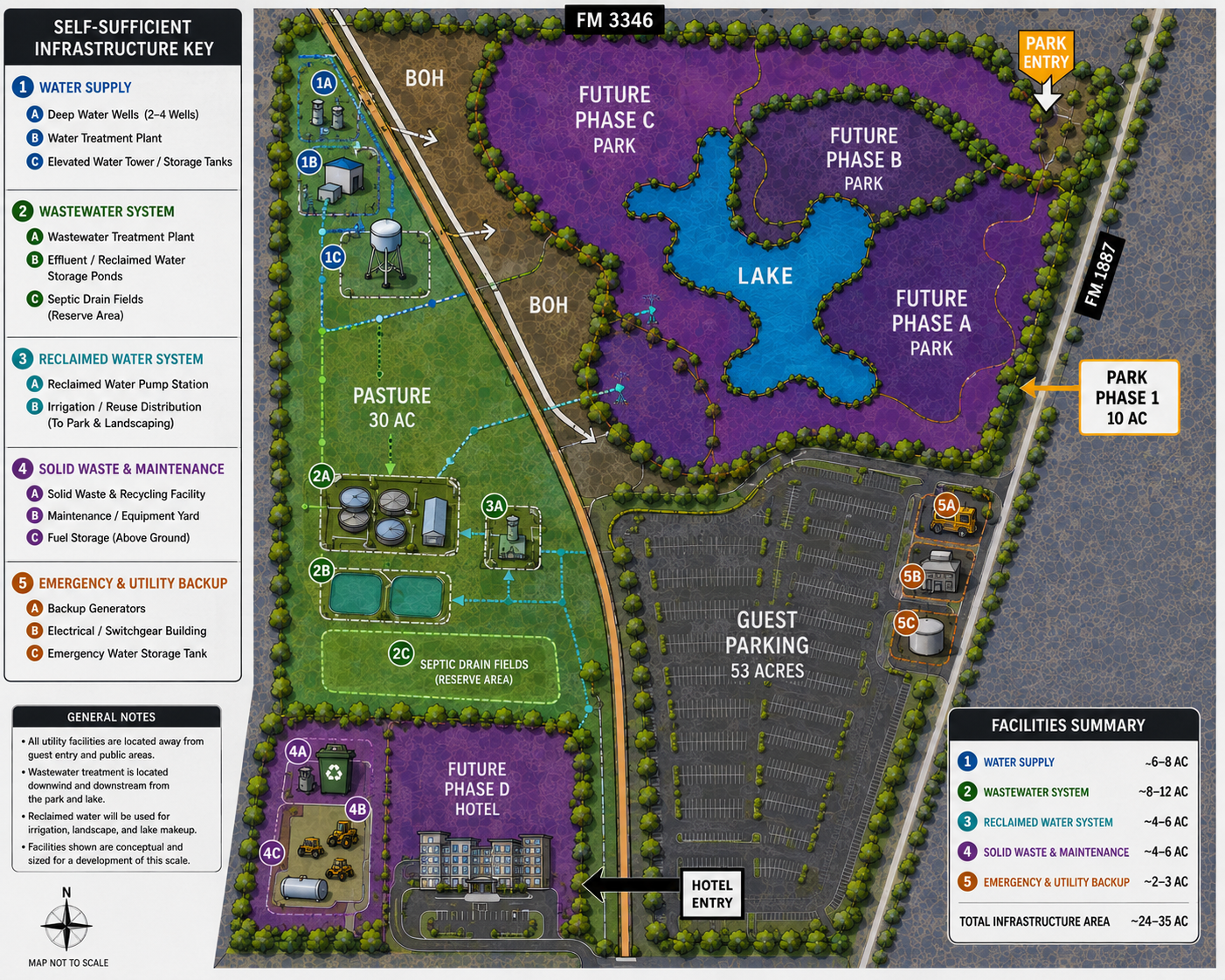
TexasLand is the creative minds who can imagine something more than a concrete-and-steel “amusement park” or “theme park.” They can imagine concrete, steel, hotels, roads, retail, restaurants, attractions, utilities, parking and drainage infrastructure—but, you know, Texas-themed.
TexasLand is water. Lots and lots of water. Water for hotels. Water for restaurants. Water for attractions. Water for bathrooms. Water for landscaping. Water for thousands of guests. Where exactly all that water ultimately comes from without adversely affecting the people already relying on local groundwater? That's the boring part of the dream.
TexasLand is also sewage. Because every Texas-sized dream eventually has to flush. Thousands of visitors don't just arrive with wallets—they arrive with toilets to use, wastewater to generate, trash to discard, and infrastructure needs that don't disappear simply because they weren't featured in the promotional video.
TexasLand is pavement, because nothing celebrates an open Texas landscape quite like figuring out how much of it can be covered with buildings, roads, parking areas and other impervious surfaces while still calling the finished product a celebration of the countryside.
TexasLand is the trees and vegetation that currently occupy the property, at least until they're standing somewhere inconvenient to the development plan. Fortunately, manufactured landscaping can always remind visitors what nature looked like.
TexasLand is wildlife, too. Deer, birds, small mammals and everything else currently using a relatively quiet rural landscape will get an exciting new opportunity to participate in TexasLand's economic-development program by exploring the surrounding countryside for alternative accommodations.
TexasLand is cattle and horses. Don't worry—they're keeping some pasture. Because after developing a rural property to celebrate Texas ranching heritage, it would be awkward not to leave enough actual rural Texas around to serve as a prop.
TexasLand is traffic—thousands of new reasons to experience the charm of rural two-lane roads alongside people who actually use those roads to get home, get to work, haul livestock, move equipment and respond to emergencies.
TexasLand is the neighboring community beyond the gates, whose residents get to participate whether they purchase admission or not. They'll experience the traffic, noise, lights, construction, infrastructure demands and other effects of becoming neighbors with a major tourist destination. Now that's an all-inclusive package.
TexasLand is public safety, because dramatically increasing the number of people traveling into an area naturally increases calls for law enforcement, fire protection, EMS, traffic management and other public services. Apparently even Texas-sized fun occasionally needs an ambulance.
TexasLand is the “big and bright” stars of the Texas night sky—which are already big and bright. No admission required. No attraction necessary. No parking lot needed. We've been enjoying them just fine.
TexasLand is economic impact, because apparently if enough money changes hands somewhere in the region, every other impact becomes considerably less interesting.
TexasLand is authenticity: constructing a destination where people can travel to experience cowboys, cattle, open spaces and Texas culture while actual ranchers, cattle, wildlife and rural families live immediately outside the gates.
TexasLand is the thousands of visitors they hope will come.
Waller County is the people who are already here.
TexasLand is the hours of blood, sweat and tears given by committed “do-ers” who remind us that it's harder to build something than tear something down.
On that point, we agree.
Because it took generations to build these farms, ranches, homes and communities.
And once you fundamentally change rural land, putting it back is considerably harder than putting up a theme park.
So, in the spirit of their closing thought:
You don't have to wonder what we're against when you know what—and who—we're for.
We're for Waller County.
The real one.
Bedtime just got a little harder.
Need a bedtime story for the families being told not to worry? Meet Thorns Lullaby, a Waller County bedtime story inspired by the curious idea that you can preserve rural Texas by developing it.
Follow along as we explore big dreams, bigger promises, thousands of cars, strained infrastructure, and the magical transformation of actual Texas countryside into a place where visitors can pay to experience “Texas.”
Read it with your kids. After all, it’s their countryside we’re fighting to protect.